What Is GEO? The Future of SEO in the Age of AI Search
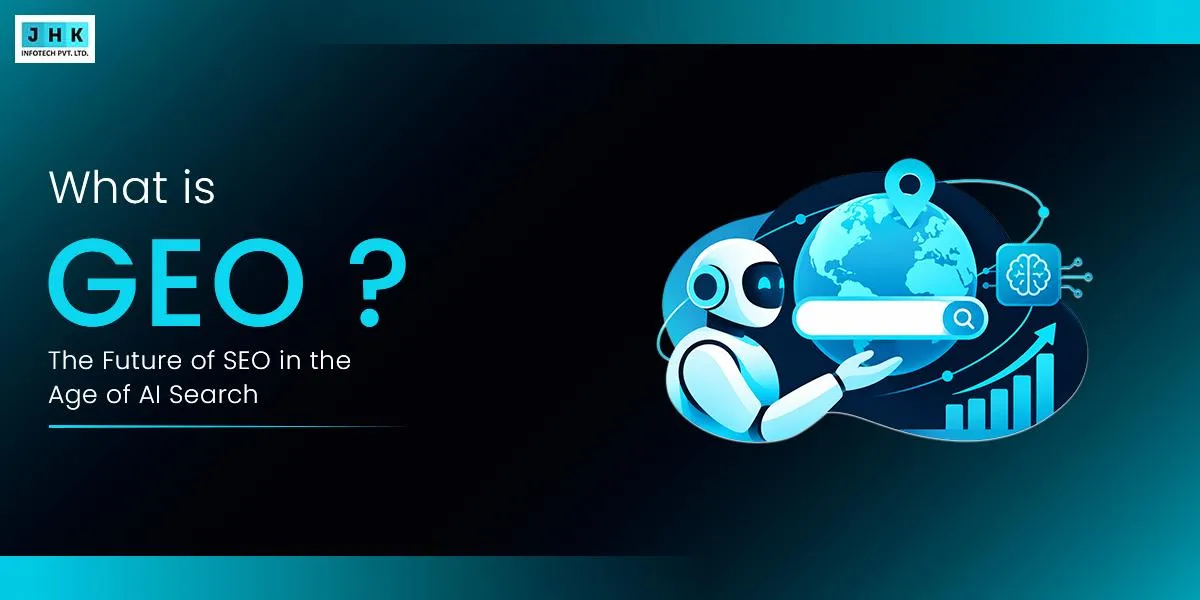
Search is changing rapidly. People are no longer relying only on Google’s traditional search results. They are increasingly asking AI-powered tools for direct answers, recommendations, and solutions.
This is where GEO (Generative Engine Optimization) comes in.
What Is GEO?
GEO stands for Generative Engine Optimization. It focuses on optimizing your website and content so AI-powered search systems can better understand your business and potentially use or reference your information when generating answers.
While traditional SEO focuses on improving search engine rankings, GEO focuses on visibility within AI-generated answers.
GEO vs SEO
SEO: Helps your website rank in traditional search results.
GEO: Helps your content become more understandable and useful to AI-powered search experiences.
The two aren’t replacements for each other. SEO and GEO work together.
Why Does GEO Matter?
Imagine a customer asks an AI:
“What are the best web development companies for a small business?”
Instead of searching through multiple websites, they may receive a direct AI-generated recommendation.
For businesses, this means being visible in AI-powered search can become just as important as traditional search rankings.
How Can You Optimize for GEO?
Businesses can start with a few simple steps:
- Create helpful and original content.
- Answer real customer questions.
- Use clear headings and structured information.
- Build authority around your industry.
- Publish case studies and real examples.
- Keep business information accurate and consistent.
- Continue following strong SEO practices.
- Make your website fast, mobile-friendly, and easy to navigate.
The Future of Search
GEO doesn’t mean SEO is dead.
Instead, SEO is evolving.
The future of online visibility will combine SEO + GEO + high-quality content + strong branding + excellent user experience.
Businesses that start preparing for AI-powered search today can build a stronger digital presence for tomorrow.
Is Your Website Ready for AI Search?
At JHK Infotech, we help businesses create modern, optimized websites that are built for today’s digital landscape.
Want to make your website ready for the future of search? Contact JHK Infotech today.
Frequently Asked Questions
What is Generative Engine Optimization (GEO)?
Generative Engine Optimization (GEO) is the practice of creating and optimizing content so that AI-powered search and answer engines can understand, reference, and potentially include that information in their generated responses. GEO focuses on clear, useful, trustworthy, and well-structured content.
What is the difference between GEO and SEO?
SEO focuses primarily on improving visibility in traditional search engine results, while GEO focuses on visibility within AI-generated answers. The two approaches are complementary because search engines and AI systems can both rely on high-quality, relevant, and authoritative content.
How does GEO work?
GEO involves creating content that is easy for AI systems and users to understand. Important practices include answering questions directly, providing accurate information, using clear headings and structured content, demonstrating expertise, supporting claims with reliable sources, and keeping information up to date.
Does GEO replace traditional SEO?
No. GEO does not replace traditional SEO. SEO remains important for helping search engines discover, crawl, understand, and rank webpages, while GEO addresses the growing use of AI-generated search and answer experiences. Businesses can use both approaches as part of their overall search strategy.
What type of content works well for GEO?
Content that directly answers user questions and provides useful, specific information can be suitable for AI search. Helpful formats include detailed guides, original research, comparisons, FAQs, step-by-step explanations, expert insights, case studies, and content supported by credible sources.
Recent Post
-
September 16, 2026
Multimodal AI: How AI Is Learning to See, Hear, Speak and Understand
-
September 11, 2026
AI Employees: How Businesses Are Building Digital Workforces in 2026
-
September 7, 2026
What Is GEO? The Future of SEO in the Age of AI Search
-
-
February 26, 2026
AI Trends 2026: Latest AI Innovation, Developments & Predictions