AI Trends 2026: Latest AI Innovation, Developments & Predictions
Artificial intelligence is no longer a fringe innovation. In 2026, AI has become a core driver of global technological progress, reshaping how businesses operate, governments plan, and people interact with digital systems. Searches for AI trends, latest AI, or what’s new in AI now reflect a demand for real-world impact—not theoretical ideas.
AI’s rapid evolution in 2026 is driven by powerful forces coming together. Advances in computing power, access to massive datasets, improved model architectures, and widespread enterprise adoption have accelerated AI growth far beyond earlier expectations. AI has moved out of research labs and into everyday systems, powering automation, personalization, predictive intelligence, and decision-making across industries.
At the same time, AI trending topics dominate technology news as governments debate regulation, organizations redesign workflows, and consumers interact daily with AI-powered tools—often without realizing it. Understanding current and future AI trends is now essential for business leaders, marketers, educators, and policymakers preparing for an AI-driven future.
This article delivers a clear and structured overview of AI trends in 2026, covering current developments, new AI technologies, expert predictions, and the future of artificial intelligence. The focus is on depth, clarity, and strong topical relevance aligned with long-term SEO and search intent.
Current Trends in AI (2025–2026 Overview)
The most defining shift in current trends in artificial intelligence is the transition from experimentation to infrastructure. Between 2025 and 2026, AI stopped being treated as an optional innovation layer and became a core operational component across organizations. Companies no longer ask whether they should adopt AI; they ask how deeply AI should be embedded into their systems.
One major current trend in IT is the normalization of AI-assisted workflows. Software development teams use AI for code generation and testing. Marketing teams rely on AI for predictive analytics and personalization. Customer support is increasingly driven by AI systems capable of understanding context rather than scripted responses. This reflects a broader trend where AI is no longer a standalone tool but an integrated capability across departments.
Another significant AI new trend is the democratization of AI access. Cloud-based AI platforms, open-source models, and low-code AI solutions have reduced barriers to entry. Small and mid-sized businesses now leverage AI technologies that were previously available only to large enterprises. This has accelerated AI growth globally and intensified competition across industries.
Current technology trends also show a shift toward responsible AI adoption. Organizations are investing in explainability, fairness, and compliance frameworks to ensure AI systems align with ethical and regulatory expectations. This balance between innovation and governance is becoming a defining feature of AI deployment in 2026.
Modern AI strategies depend heavily on the platforms they run on. Whether it’s optimizing an eCommerce store, improving website performance, or integrating automation into business workflows, the success of AI initiatives is closely tied to strong development and optimization practices. Businesses investing in AI must also invest in reliable web, eCommerce, and digital marketing infrastructure to stay competitive.
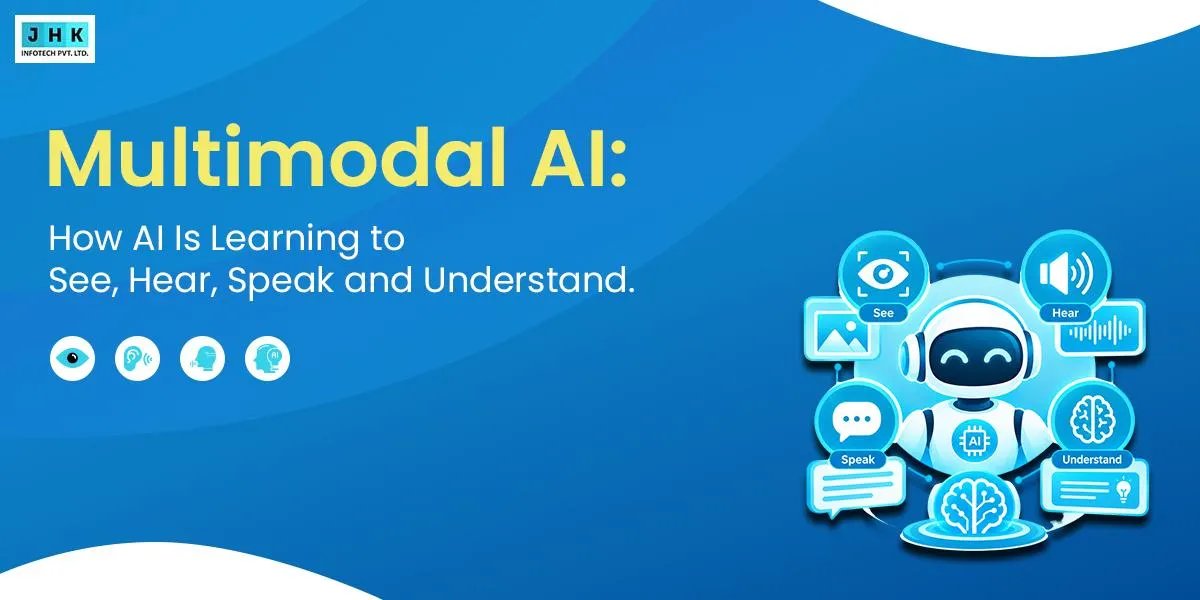
Generative AI has evolved far beyond text generation. In 2026, the latest AI trends emphasize multimodal systems capable of understanding and generating text, images, video, audio, and code within a single unified model. These systems no longer operate in silos; they interpret complex inputs and produce cohesive outputs across formats.
Real-world use cases demonstrate how transformative this shift is. In product design, AI generates visual prototypes alongside written specifications. In education, AI systems produce interactive lessons combining explanations, visuals, and simulations. In software engineering, AI writes code, generates documentation, and creates user interface mockups simultaneously.
These developments represent some of the most impactful recent AI developments, as they significantly reduce production time while increasing creative and operational efficiency. New trending AI tools in this space are reshaping content creation, design workflows, and knowledge work at scale.
Autonomous AI Agents
Another defining AI new trend in 2026 is the rise of autonomous AI agents. Unlike earlier AI systems that required constant human prompts, these agents can plan tasks, make decisions, execute actions, and adapt based on feedback. They operate within defined boundaries but function with a high degree of independence.
In enterprise environments, autonomous agents handle scheduling, data analysis, system monitoring, and even procurement processes. In productivity contexts, they manage workflows across applications, reducing manual intervention. These systems represent practical examples of future AI technology already in use today.
The significance of autonomous agents lies in their ability to shift AI from reactive assistance to proactive execution. This marks a fundamental change in how humans and machines collaborate and provides a clear example of how AI and the future are increasingly intertwined.
AI and Real-Time Personalization
AI-driven personalization has moved from segmentation to real-time individual adaptation. In 2026, AI systems analyze user behavior, context, device, and intent simultaneously to deliver hyper-personalized experiences. This trend is particularly visible in marketing, healthcare, and education.
In marketing, AI dynamically adjusts content, messaging, and offers based on user behavior in real time. In healthcare, AI personalizes treatment recommendations based on patient history and live health data. In education, AI adapts learning paths based on student progress, preferences, and engagement levels.
This level of personalization illustrates how AI growth directly impacts user experience and long-term engagement. It also reinforces why AI trends are increasingly central to digital strategy discussions across industries.
New AI Technologies Transforming Industries
New AI technologies are reshaping industries by automating complex processes, improving decision intelligence, and unlocking insights previously hidden in data. In healthcare, AI supports diagnostics, drug discovery, and personalized treatment planning. Advanced models analyze medical imaging, genomic data, and patient records with remarkable accuracy.
In finance, AI technologies power fraud detection, risk assessment, algorithmic trading, and customer service automation. Financial institutions rely on AI systems to process vast amounts of transactional data in real time, improving both security and efficiency.
Education has seen rapid adoption of new AI technologies that support adaptive learning, automated assessment, and content generation. These systems help educators scale personalized instruction while reducing administrative workload.
Manufacturing benefits from AI-powered automation and predictive maintenance. AI systems analyze sensor data to detect anomalies, optimize production lines, and reduce downtime. These applications represent some of the most impactful new technologies in artificial intelligence, demonstrating how AI latest technology directly influences operational performance.
As AI adoption accelerates, businesses need more than insights—they need execution. From AI-powered eCommerce platforms to scalable web applications and automation-driven workflows, turning AI trends into measurable outcomes requires the right technical foundation. This is where professional web development, SEO, digital marketing, and eCommerce solutions play a critical role in supporting long-term AI-driven growth.
Artificial Intelligence Recent Developments
Recent AI developments between 2025 and 2026 focus heavily on infrastructure and efficiency. One major breakthrough is the development of more energy-efficient AI models. As AI systems grow in scale, reducing energy consumption has become critical. Researchers and companies are optimizing architectures and hardware to deliver high performance with lower environmental impact.
Edge AI is another key area of artificial intelligence recent developments. Instead of processing data exclusively in centralized cloud servers, AI models increasingly run on local devices such as smartphones, industrial sensors, and autonomous systems. This reduces latency, improves privacy, and enables real-time decision-making in environments where connectivity is limited.
Infrastructure advancements also include improved AI training pipelines, better model compression techniques, and more secure deployment frameworks. These latest technological breakthroughs make AI systems more reliable, scalable, and accessible across use cases.
Is 2026 the Next Big Year for AI?
Many experts argue that 2026 represents a pivotal moment in artificial intelligence adoption. While AI has been advancing steadily for years, this period marks the transition from widespread adoption to systemic dependence. AI is no longer an enhancement; it is foundational to how digital systems operate.
Artificial intelligence 2026 discussions often focus on regulation and governance. Governments worldwide are introducing frameworks to address data privacy, algorithmic accountability, and ethical AI usage. These regulatory efforts aim to balance innovation with public trust.
From a technological standpoint, AI 2026 reflects maturity. Models are more reliable, deployment processes are standardized, and organizations have developed internal expertise to manage AI systems effectively. This convergence of technology, policy, and adoption explains why many consider 2026 the next defining year for AI.
Artificial Intelligence Predictions for the Future
Artificial intelligence predictions consistently point toward deeper integration rather than replacement. While AI will automate many tasks, experts emphasize that its primary role will be augmenting human capabilities. AI systems excel at pattern recognition, data processing, and optimization, while humans provide creativity, judgment, and ethical reasoning.
Future artificial intelligence is expected to become more contextual, explainable, and collaborative. Rather than acting as black boxes, AI systems will increasingly communicate reasoning and uncertainty. This transparency will be essential for trust and adoption in critical domains such as healthcare, law, and finance.
When considering what is the future of AI, the focus shifts from individual tools to ecosystems. AI will operate across interconnected platforms, coordinating data and actions seamlessly. This evolution defines the future of AI technology as an integrated layer of intelligence embedded across digital infrastructure.
The Future With AI: Opportunities and Risks
The future with AI presents immense opportunities. AI-driven automation increases productivity, reduces operational costs, and enables innovation at scale. In daily life, AI improves accessibility, personalization, and convenience across services.
However, these benefits come with risks. Ethical concerns around bias, surveillance, and job displacement remain central to AI discourse. Ensuring AI safety, fairness, and accountability is critical as systems gain autonomy and influence.
Balancing innovation with responsibility will define how AI and the future coexist. Organizations that prioritize ethical AI practices will be better positioned to sustain trust and long-term value.
Latest Trends in AI Technology (Tech Perspective)
From a technical perspective, the latest trends in AI include deeper integration with cybersecurity and cloud infrastructure. AI-driven security systems detect anomalies, predict threats, and respond faster than traditional methods. As cyber threats grow more sophisticated, AI becomes essential for defense.
Cloud and edge computing convergence also defines new tech trends. AI workloads dynamically shift between cloud and edge environments based on latency, cost, and privacy requirements. This flexibility enables scalable and resilient AI deployments across industries.
These latest technology trends highlight how AI is not evolving in isolation but as part of a broader technological ecosystem.
Big technology companies play a significant role in shaping AI trends, and Microsoft continues to dominate news about AI in 2026. The company has made substantial investments in AI infrastructure, cloud-based AI services, and enterprise AI tools.
Microsoft’s AI platforms support businesses in deploying models securely and at scale. Partnerships with research organizations and startups further accelerate innovation. These developments keep Microsoft in the news as a central figure in recent AI developments and enterprise AI adoption.
What’s New in AI Right Now?
The most notable answer to what’s new in AI lies in convergence. AI systems now combine reasoning, perception, and action within unified frameworks. This enables faster deployment, improved performance, and more natural interaction between humans and machines.
AI trending technologies emphasize reliability, scalability, and real-world impact rather than experimental novelty. This shift reflects the maturation of the AI ecosystem.
Advancements in AI Driving the Next Decade
Advancements in AI point toward a gradual move from narrow task-specific systems to more general-purpose intelligence. While artificial general intelligence remains a long-term goal, current progress shows AI systems becoming more adaptable and context-aware.
The long-term impact of AI on jobs and economies will depend on how societies manage reskilling and education. AI will transform roles rather than eliminate them outright, creating demand for new skills and interdisciplinary expertise.
These advancements in AI reinforce why understanding AI trends today is essential for preparing for the future of AI.
Conclusion
AI trends in 2026 reflect a technology that has moved beyond experimentation into essential infrastructure. From new AI technologies and recent developments to long-term predictions and ethical considerations, artificial intelligence is shaping the future at every level.
Businesses and individuals that invest in AI literacy, responsible adoption, and strategic integration will be best positioned to thrive. The future artificial intelligence landscape will reward those who understand not just what AI can do, but how to align it with human values and goals.
As AI growth continues, staying informed about the latest AI trends is no longer optional. It is a strategic necessity in an increasingly intelligent world.
Recent Post
-
September 16, 2026
Multimodal AI: How AI Is Learning to See, Hear, Speak and Understand
-
September 11, 2026
AI Employees: How Businesses Are Building Digital Workforces in 2026
-
September 7, 2026
What Is GEO? The Future of SEO in the Age of AI Search
-
-
February 26, 2026
AI Trends 2026: Latest AI Innovation, Developments & Predictions