PHP Security Issues in 2026: Vulnerabilities, Risks, and Solutions
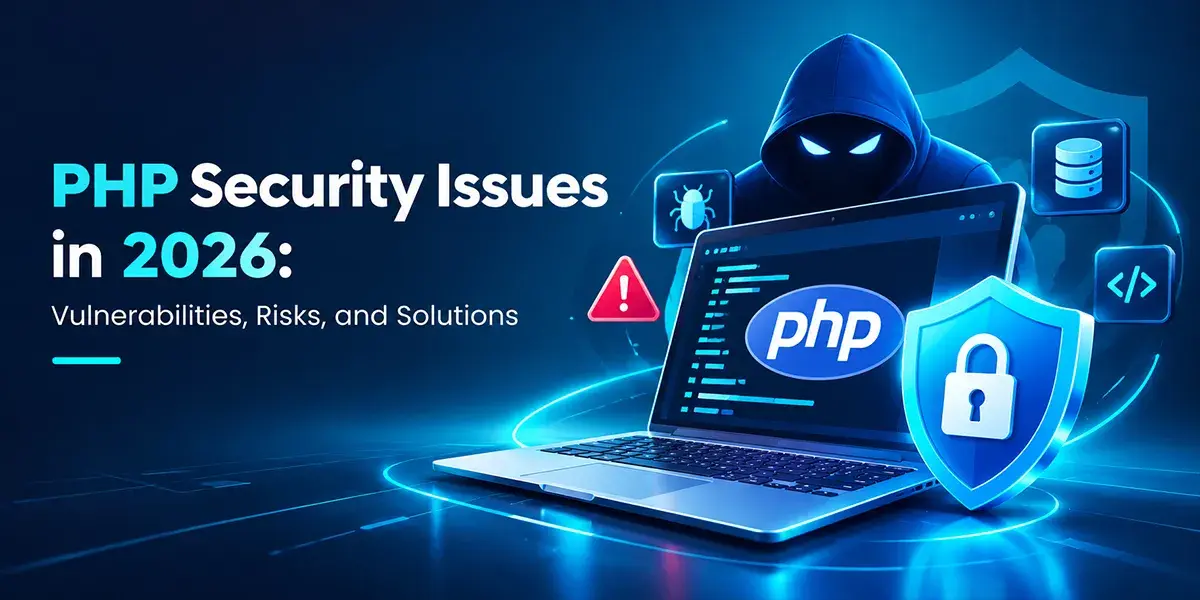
PHP is one of the most widely used programming languages for developing websites, web applications, and eCommerce platforms. However, security vulnerabilities can put websites, servers, and sensitive business data at risk. In 2026, PHP security remains an important concern for developers and businesses. Regular security updates, secure coding practices, and proper server configuration are essential to protect applications from potential cyberattacks.
Latest PHP Security Vulnerabilities
On October 21, 2026, the PHP team released security updates for several maintained PHP branches to address two critical vulnerabilities.
The vulnerabilities are identified as:
- CVE-2026-109618: A memory corruption issue associated with out-of-memory handling.
- CVE-2026-109619: A vulnerability involving stale global state that can persist under certain error conditions.
Both vulnerabilities can potentially allow remote code execution. This means an attacker may be able to execute malicious code on a vulnerable server under certain conditions.
The PHP team and security authorities have urged administrators to update affected installations promptly. A further issue, CVE-2026-115560, was disclosed on October 23, 2026, involving a more specific configuration-dependent attack path.
Common PHP Security Risks
PHP applications may face several security threats if they are not developed and maintained properly.
- Remote Code Execution (RCE): May allow attackers to execute unauthorized code on a vulnerable server.
- SQL Injection: Occurs when unsafe database queries allow attackers to manipulate database operations.
- Cross-Site Scripting (XSS): Allows malicious scripts to run in users’ browsers when application output is not handled safely.
- File Upload Vulnerabilities: Improper upload validation can allow dangerous files to reach a server.
- Outdated PHP Versions: Unsupported or unpatched versions may expose applications to known security vulnerabilities.
Understanding these risks helps developers implement appropriate security measures and build more reliable applications.
How PHP Vulnerabilities Affect Websites
Security vulnerabilities can have serious consequences for businesses. Attackers may exploit vulnerable applications to access sensitive information, modify website content, compromise server resources, or interrupt services.
A successful attack can also damage customer trust, affect business operations, and increase recovery costs. Therefore, PHP security should be treated as an ongoing priority rather than a one-time task.
Best Practices to Secure PHP Applications
Developers and businesses can reduce security risks by following these essential practices:
- Update PHP Regularly: Use a supported PHP version with the latest applicable security patches.
- Secure Database Queries: Use prepared statements and parameterized queries to prevent SQL injection.
- Validate User Input: Validate data received through forms, APIs, and file uploads.
- Protect Sensitive Data: Store passwords securely and keep database credentials and API keys private.
- Update Dependencies: Regularly update PHP frameworks, libraries, plugins, and other software components.
- Monitor and Back Up: Review security logs, maintain regular backups, and test recovery procedures.
Following these practices helps reduce common security risks and improves the overall reliability of PHP applications.
Why Regular PHP Updates Are Important
PHP updates help fix known security vulnerabilities, improve stability, and maintain compatibility with modern technologies.
Using outdated PHP versions can increase security risks because older branches may no longer receive official security fixes. Businesses should review their PHP environment regularly and plan upgrades before their current version reaches end of life.
Before upgrading a production website, developers should test changes in a staging environment to identify compatibility problems and prevent unexpected downtime.
Conclusion
PHP security in 2026 demands proactive attention. Critical core vulnerabilities like PHP2Shell show how quickly risks can escalate. Combining timely updates with solid coding practices, dependency management, and ongoing monitoring is the most effective defense.
At JHK Infotech, we specialize in secure, high-quality PHP development and ongoing maintenance. Our team helps businesses keep their digital platforms robust, up-to-date, and protected against evolving threats.
Need help securing or upgrading your PHP application?
Contact JHK Infotech today to discuss your website development and security requirements.
Frequently Asked Questions (FAQs)
1. What are PHP security vulnerabilities?
PHP security vulnerabilities are weaknesses in the PHP runtime, application code, or related components that attackers may exploit to compromise a website or access sensitive information.
2. How can I protect my PHP website?
Keep PHP and its dependencies updated, validate user input, secure database queries, use appropriate access controls, and maintain regular backups.
3. Why should businesses update PHP regularly?
Regular updates help fix known vulnerabilities, improve stability, and reduce the risk of security incidents.
4. Is using the latest PHP version enough to secure a website?
No. A secure website also requires safe coding practices, updated dependencies, appropriate server configuration, access controls, and regular security monitoring.
Recent Post
-
October 29, 2026
PHP Security Issues in 2026: Vulnerabilities, Risks, and Solutions
-
September 16, 2026
Multimodal AI: How AI Is Learning to See, Hear, Speak and Understand
-
September 11, 2026
AI Employees: How Businesses Are Building Digital Workforces in 2026
-

September 7, 2026
What Is GEO? The Future of SEO in the Age of AI Search
-